De-stress · Brain health technique
Acceptance and Commitment Therapy (ACT)
Evidence grade: Context Dependent
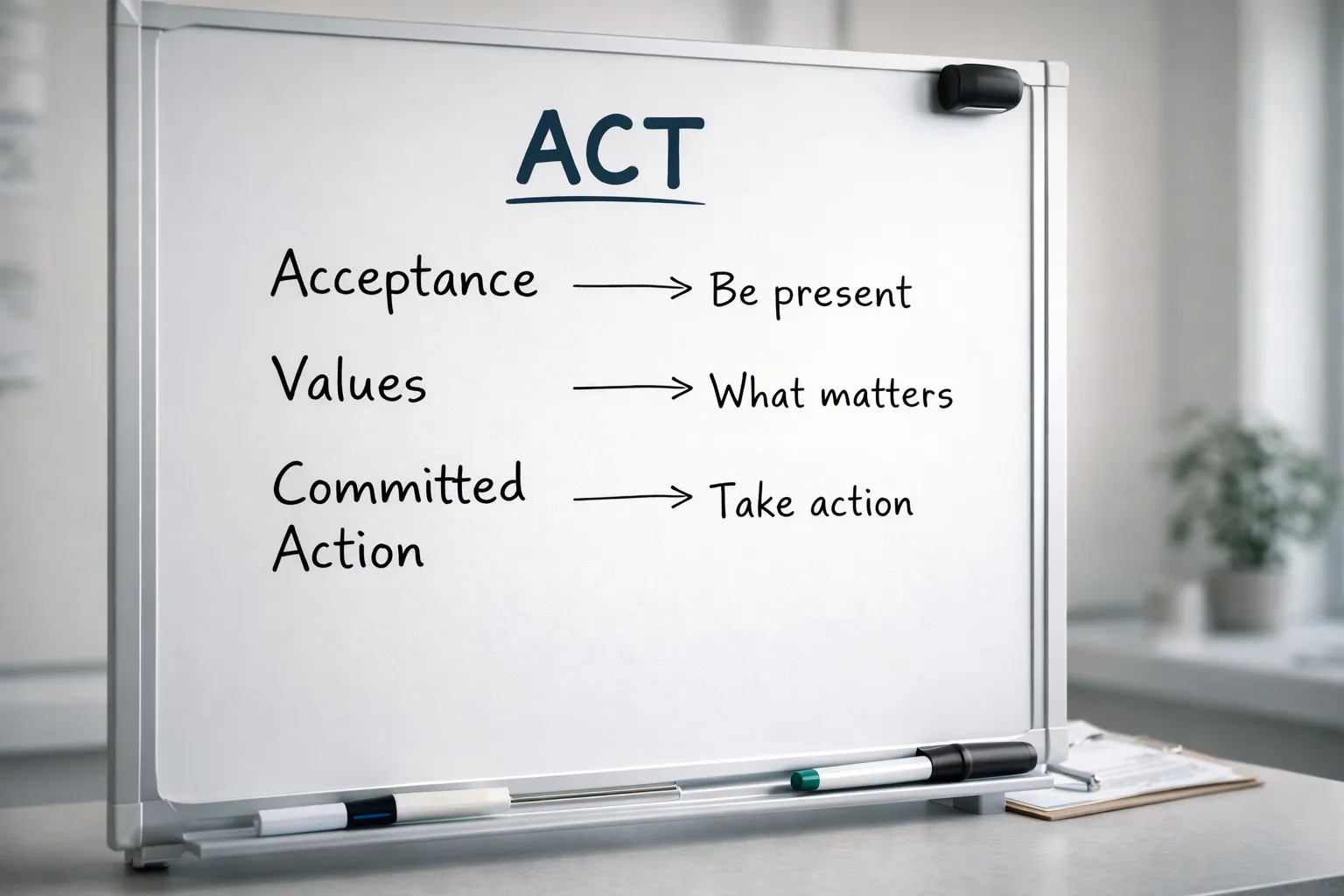
A psychological approach that promotes acceptance of internal experiences and commitment to actions aligned with personal values, using mindfulness and cognitive defusion techniques.
- Practice
- De-stress
- Principle
- Restoration
- Tactic
- Clinical Therapy
- Evidence grade
- Context Dependent
- Strength of evidence
- Medium
How to practice Acceptance and Commitment Therapy (ACT)
Work with an ACT-trained therapist or self-guided workbook. Practice identifying values, noticing unhelpful thoughts without judgment, and taking value-driven action. Use brief daily check-ins (“Am I acting on what matters?”). Best for those prone to perfectionism, anxiety, or chronic stress cycles.
The evidence behind Acceptance and Commitment Therapy (ACT)
ACT builds psychological flexibility, which means staying open to hard feelings while acting on what matters. Flexibility strongly predicts resilience and fewer stress-related health problems. Pooled studies show moderate benefits for anxiety, depression, and chronic pain. ACT also reduces the tendency to push away uncomfortable feelings.
Impact on brain health
ACT appears to rebalance activity between your brain's limbic system and prefrontal cortex. Evidence for long-term effects on the brain is indirect.
Reviewed by BetterBrain's clinical advisors · Updated November 2026 · Our science
More De-stress techniques
Pair this with other habits from the same practice.

Evidence grade: Essential
Mindfulness Meditation
A structured practice of sustained, nonjudgmental awareness of present experience, typically focusing on breath, sensations, or thoughts, to reduce reactivity and enhance emotiona…

Evidence grade: Essential
Mindfulness-Based Stress Reduction (MBSR)
An 8-week structured program combining mindfulness meditation, body scanning, and gentle yoga to build awareness and reduce stress reactivity.

Evidence grade: Essential
Nature Exposure
Spending time in natural outdoor settings, parks, forests, gardens (“green”) or near water (“blue”), to reduce stress and restore cognitive and emotional balance.
Take control of your brain health
BetterBrain gives you a personalized protocol of techniques like these, backed by science and tailored to you.