De-stress · Brain health technique
Dialectical Behavior Therapy (DBT)
Evidence grade: Context Dependent
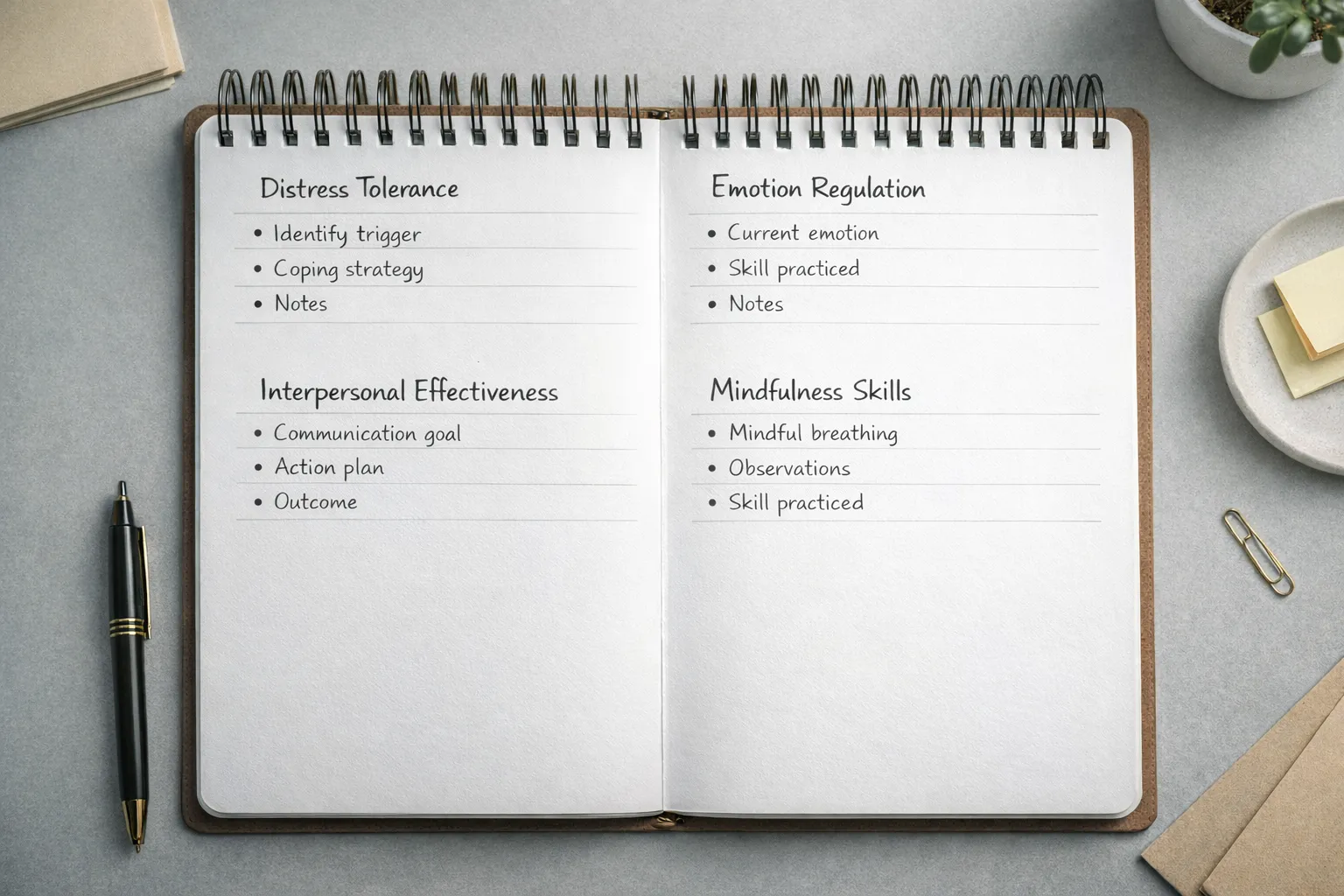
A structured form of cognitive-behavioral therapy combining mindfulness, emotion regulation, distress tolerance, and interpersonal effectiveness skills, originally developed for high emotional reactivity and self-destructive behaviors.
- Practice
- De-stress
- Principle
- Restoration
- Tactic
- Clinical Therapy
- Evidence grade
- Context Dependent
- Strength of evidence
- Medium
How to practice Dialectical Behavior Therapy (DBT)
Engage in DBT through structured group and individual sessions (typically 6–12 months). Learn one skill module at a time, mindfulness, distress tolerance, emotion regulation, and interpersonal skills. Daily practice and diary cards improve outcomes. For general stress resilience, short DBT-informed skills training can be highly effective.
The evidence behind Dialectical Behavior Therapy (DBT)
DBT helps calm intense emotional swings and impulsive reactions. Strong evidence supports it for borderline personality disorder (a condition of intense, unstable emotions) and self-harm. Emerging research shows DBT also helps a wider range of people manage strong emotions and stress. Results build with repeated practice of DBT skills.
Impact on brain health
DBT is thought to strengthen the control your prefrontal cortex has over your limbic system. Repeated skills practice improves executive control under stress.
Reviewed by BetterBrain's clinical advisors · Updated November 2026 · Our science
More De-stress techniques
Pair this with other habits from the same practice.

Evidence grade: Essential
Mindfulness Meditation
A structured practice of sustained, nonjudgmental awareness of present experience, typically focusing on breath, sensations, or thoughts, to reduce reactivity and enhance emotiona…

Evidence grade: Essential
Mindfulness-Based Stress Reduction (MBSR)
An 8-week structured program combining mindfulness meditation, body scanning, and gentle yoga to build awareness and reduce stress reactivity.

Evidence grade: Essential
Nature Exposure
Spending time in natural outdoor settings, parks, forests, gardens (“green”) or near water (“blue”), to reduce stress and restore cognitive and emotional balance.
Take control of your brain health
BetterBrain gives you a personalized protocol of techniques like these, backed by science and tailored to you.