Sleep · Brain health technique
Eliminate electronics LEDs
Evidence grade: Context Dependent
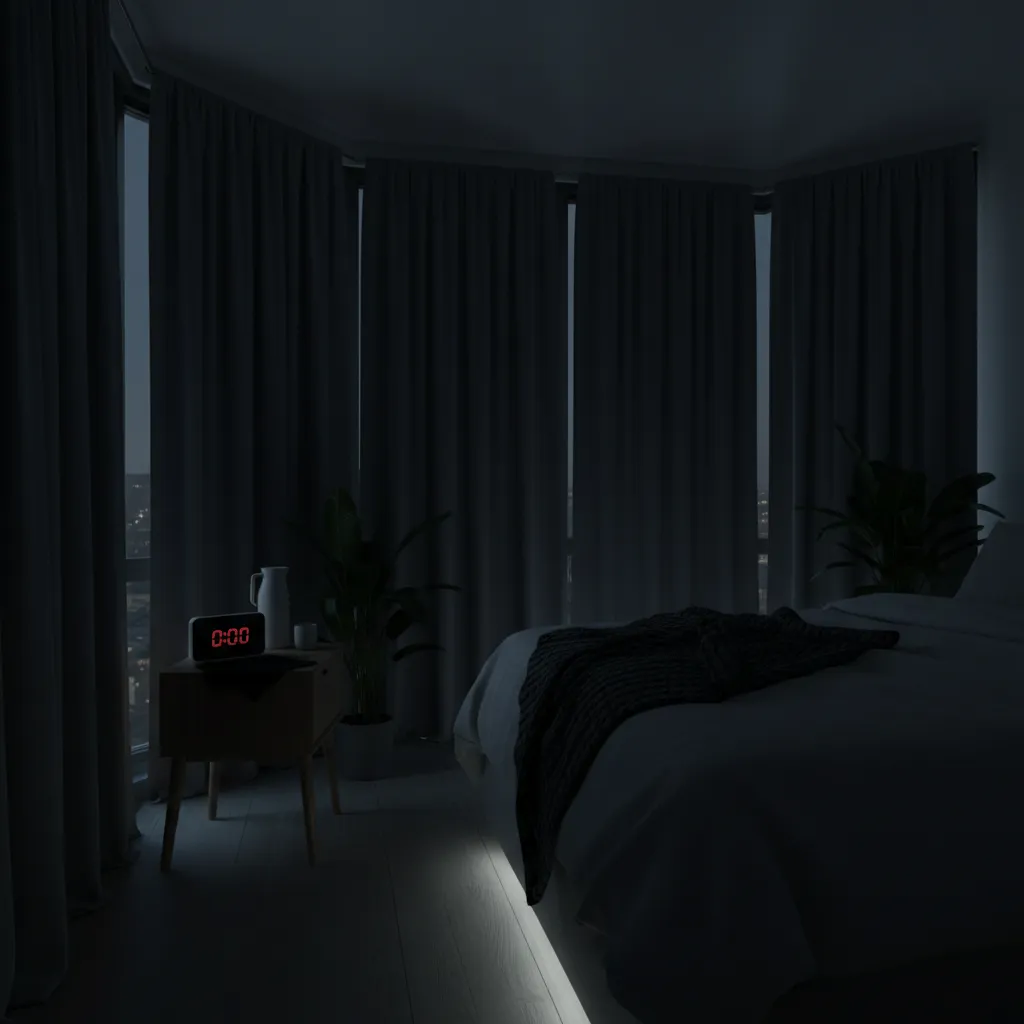
Removing or covering small light sources from electronic devices (chargers, alarm clocks, standby lights) to minimize blue and white light exposure during sleep.
- Practice
- Sleep
- Principle
- Restoration
- Tactic
- Calm And Comfortable Environment
- Health domains
- hormonal
- Evidence grade
- Context Dependent
- Strength of evidence
- Medium
- Cost
- Low
- Effort
- Low
- Time commitment
- Low
How to practice Eliminate electronics LEDs
Cover or unplug electronics emitting visible light; use opaque tape or reposition devices out of sight. Replace bright alarm clocks with dim or red-light versions. Combine with overall dark-room strategy (blackout shades, mask). Prioritize reduction of blue or white LEDs over low-intensity amber lights.
The evidence behind Eliminate electronics LEDs
Even dim light (under 10 lux) while you sleep can affect your body. In lab studies, it modestly lowers melatonin and raises your blood sugar and heart rate at night. Studies show your body clearly responds to this light, but the effect in everyday life is small unless the light is bright or persistent. Cells in the back of your eyes that contain melanopsin respond to blue light, even through closed eyelids.
Reviewed by BetterBrain's clinical advisors · Updated November 2026 · Our science
More Sleep techniques
Pair this with other habits from the same practice.

Evidence grade: Essential
Avoid alcohol before bed
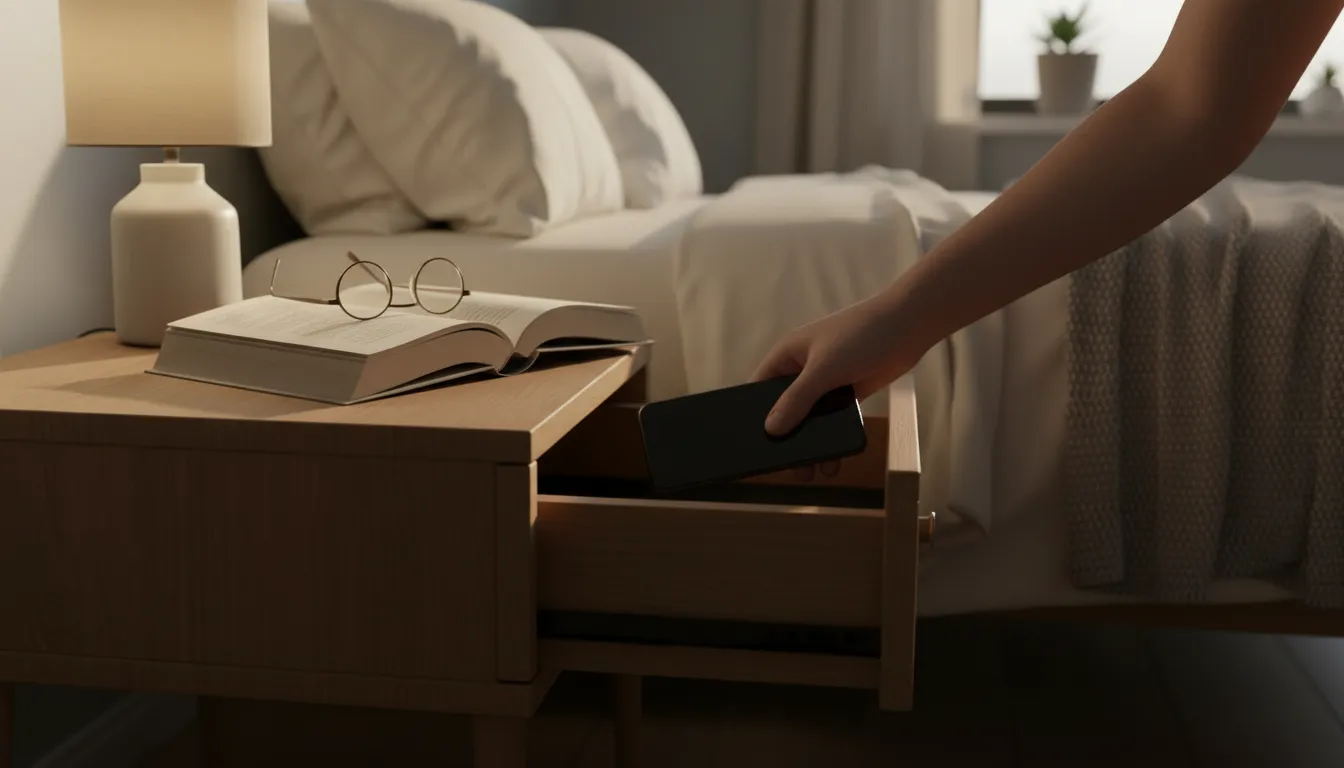
Refraining from consuming alcohol within several hours of bedtime to prevent disruption of sleep architecture and nighttime physiology.
Evidence grade: Essential
Avoid screens before bed
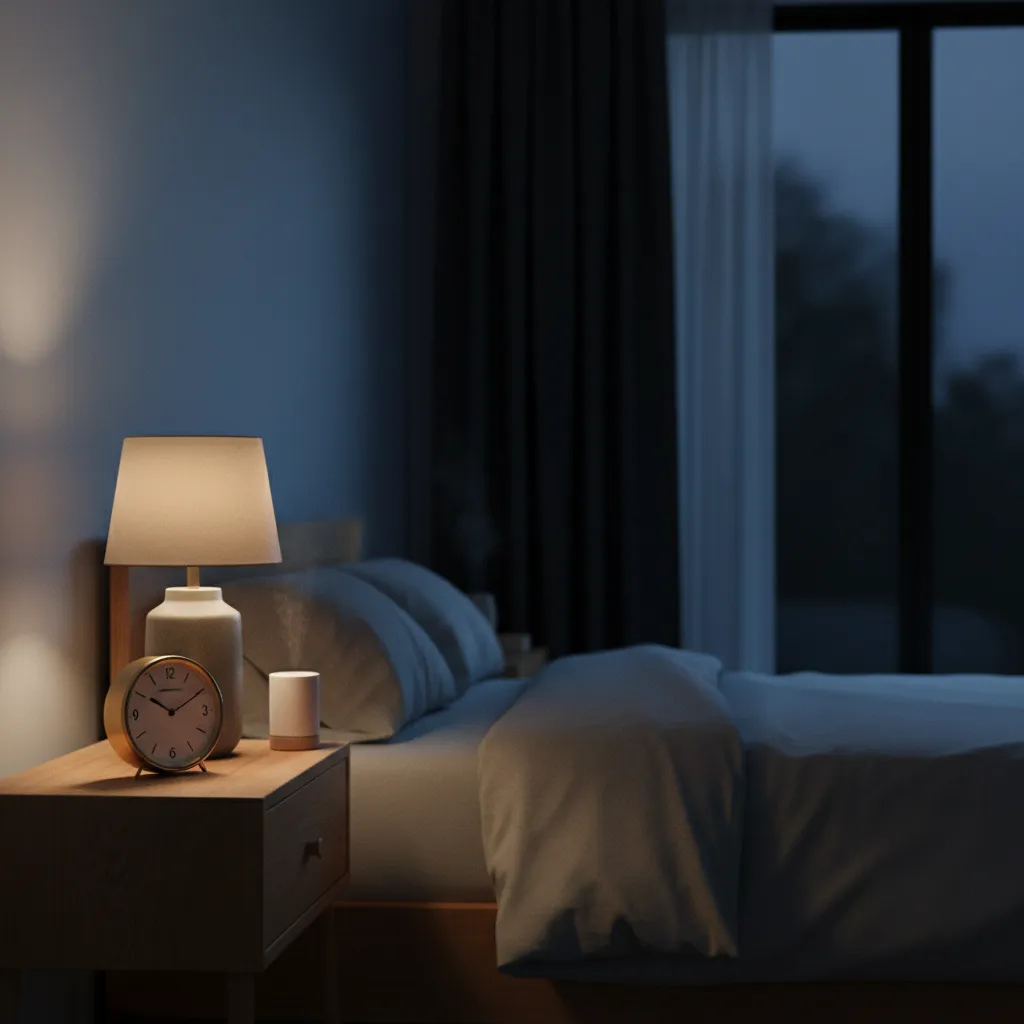
Limiting exposure to phones, tablets, TVs, or computers 1–2 hours before bedtime to prevent light–induced melatonin suppression and cognitive overstimulation.
Evidence grade: Essential
Consistent bedtime and wake-up time
Going to bed and waking up at roughly the same time every day, including weekends, to align circadian rhythms and stabilize sleep–wake patterns.
Take control of your brain health
BetterBrain gives you a personalized protocol of techniques like these, backed by science and tailored to you.