Sleep · Brain health technique
Reduce overall light exposure before bed
Evidence grade: Context Dependent
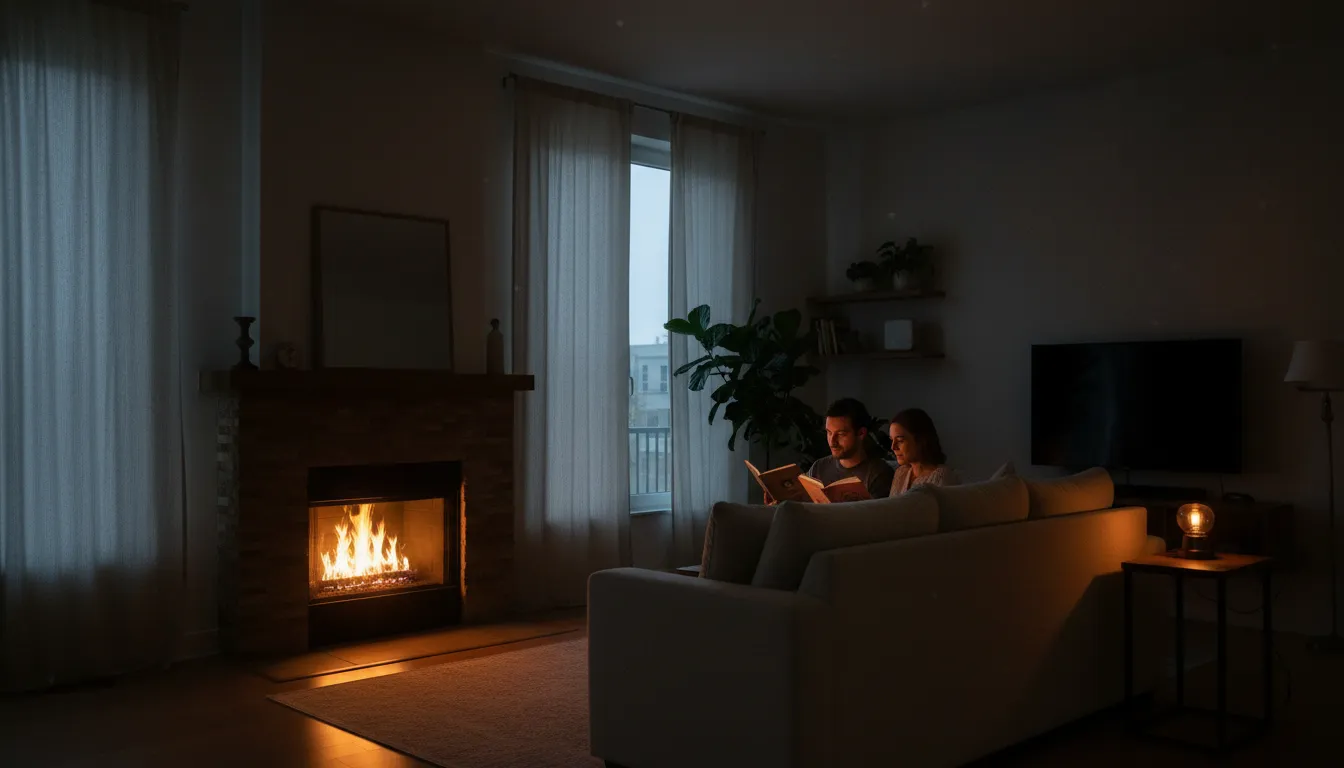
Gradually dimming indoor lighting 1–2 hours before bedtime to simulate dusk, signaling the body to transition to sleep mode.
- Practice
- Sleep
- Principle
- Restoration
- Tactic
- Managing Light And Screens
- Health domains
- hormonal
- Evidence grade
- Context Dependent
- Strength of evidence
- Medium
- Effort
- Low
- Time commitment
- Low
How to practice Reduce overall light exposure before bed
Begin dimming lights 1–2 hours before bed. Use warm, low-intensity bulbs (<50 lux, <3000 K color temperature). Turn off overhead fixtures and use lamps or candles. Avoid task lighting on faces or eyes. Pair with consistent bedtime to reinforce circadian entrainment.
The evidence behind Reduce overall light exposure before bed
Evening light exposure suppresses melatonin and shifts your body clock later. Studies show that keeping the light around you under about 50 lux (about equivalent to a couple candles) before bed helps you fall asleep faster and improves sleep quality. Dimmer light decreases activation of your melanopsin cells and calms your fight-or-flight response. This lets your rest-and-digest system take over. The evidence is consistent across sleep-lab and real-world studies in people.
Reviewed by BetterBrain's clinical advisors · Updated November 2026 · Our science
More Sleep techniques
Pair this with other habits from the same practice.

Evidence grade: Essential
Avoid alcohol before bed
Refraining from consuming alcohol within several hours of bedtime to prevent disruption of sleep architecture and nighttime physiology.

Evidence grade: Essential
Avoid screens before bed
Limiting exposure to phones, tablets, TVs, or computers 1–2 hours before bedtime to prevent light–induced melatonin suppression and cognitive overstimulation.
Evidence grade: Essential
Consistent bedtime and wake-up time
Going to bed and waking up at roughly the same time every day, including weekends, to align circadian rhythms and stabilize sleep–wake patterns.
Take control of your brain health
BetterBrain gives you a personalized protocol of techniques like these, backed by science and tailored to you.