Move · Brain health technique
Integrated training
Evidence grade: Context Dependent

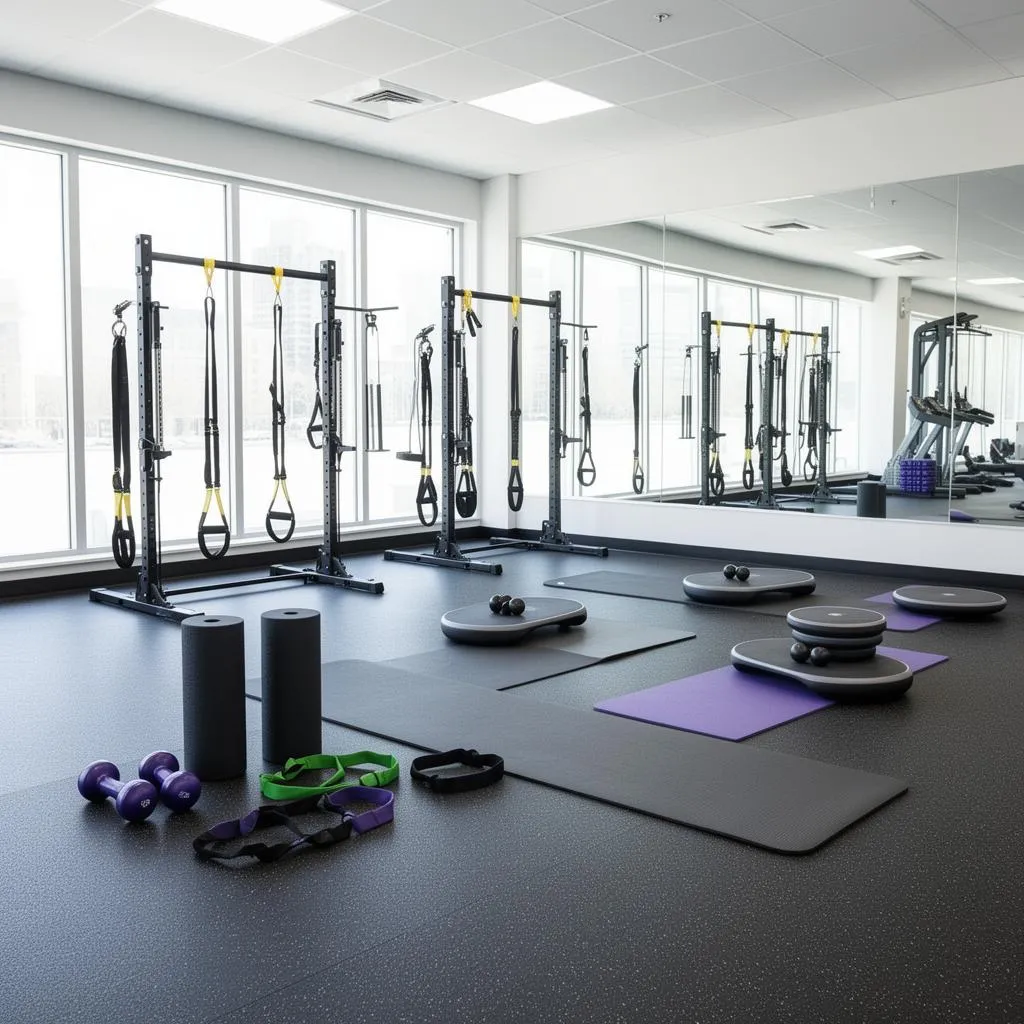
Training that blends multiple physical domains—strength, mobility, coordination, agility, and balance—into unified movement patterns. Examples include circuit training, functional fitness, and sport-specific conditioning.
- Practice
- Move
- Principle
- Engagement
- Tactic
- Training
- Evidence grade
- Context Dependent
- Strength of evidence
- Medium
How to practice Integrated training
Incorporate 1–2 integrated sessions weekly. Combine compound strength movements with agility or balance drills (e.g., squats + medicine ball throws). Emphasize smooth transitions and body awareness. Rest adequately between rounds. Ideal for time-efficient, full-body, brain-engaging exercise. Modify intensity for age and fitness level.
The evidence behind Integrated training
Integrated training works many muscles and nerve pathways at the same time. That helps your body learn and refine movement skills. Training strength and balance together is well known to lower the risk of falls in older adults. Pay close attention to your fatigue so you don't overdo it.
Impact on brain health
Early evidence shows bigger gains in executive function and reaction time than training one type of fitness at a time. The complex movement sequences engage your cerebellum and prefrontal cortex, and may strengthen connections between brain regions.
Reviewed by BetterBrain's clinical advisors · Updated November 2026 · Our science
More Move techniques
Pair this with other habits from the same practice.

Evidence grade: Essential
Aerobic cardio training
Sustained rhythmic exercise—like walking, cycling, swimming, or running—that raises heart rate and breathing while using oxygen efficiently for energy production.

Evidence grade: Essential
Daily movement
Any consistent physical activity performed throughout the day—walking, stretching, chores, or standing breaks—that keeps the body in motion and circulation active.
Evidence grade: Essential
Mobility and stability training
Exercises that enhance joint range of motion, muscular control, and postural balance—combining stretching, dynamic movement, and stabilizing strength work (e.g., yoga flows, contr…
Take control of your brain health
BetterBrain gives you a personalized protocol of techniques like these, backed by science and tailored to you.