Move · Brain health technique
Low-impact sports
Evidence grade: Context Dependent
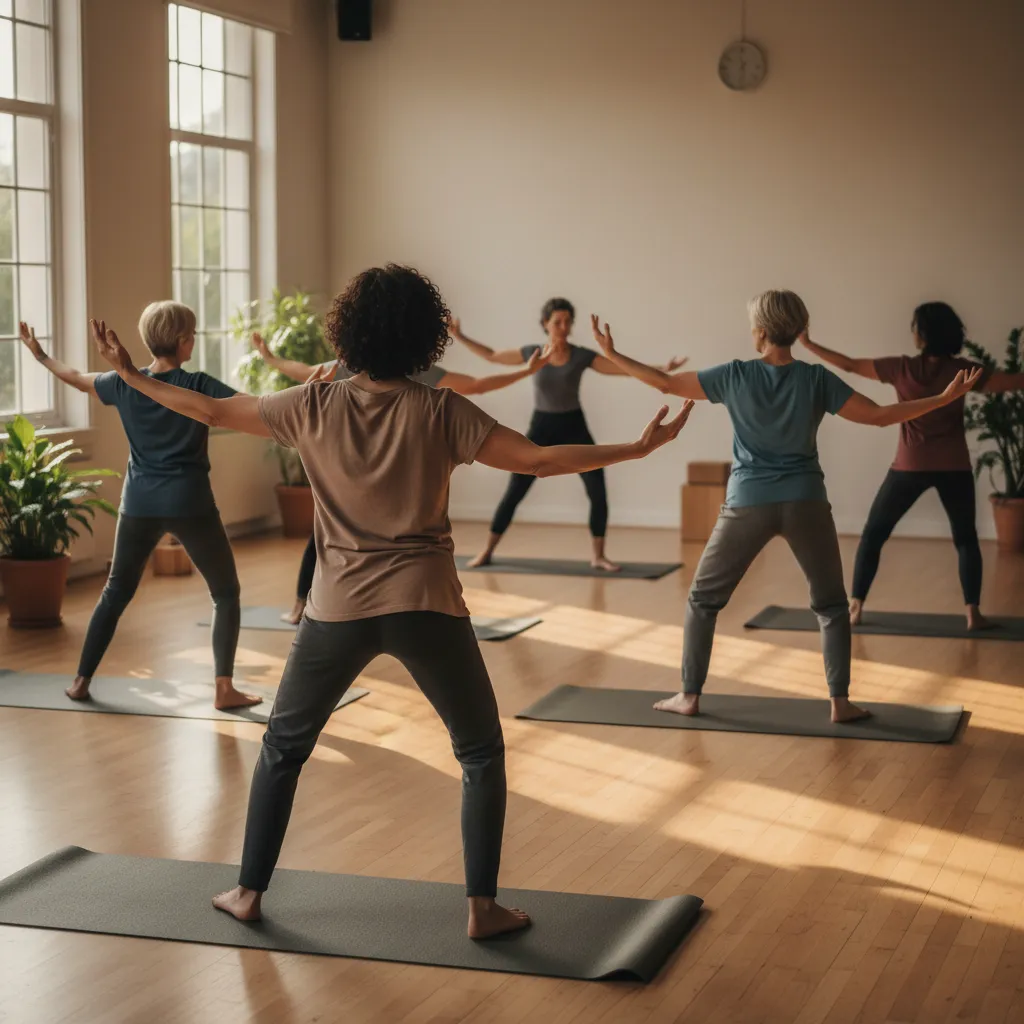
Activities minimizing joint stress while promoting strength and flexibility—such as yoga, Pilates, tai chi, and aquatic exercise. Emphasize control, breathing, and alignment.
- Practice
- Move
- Principle
- Engagement
- Tactic
- Group Physical Activities
- Evidence grade
- Context Dependent
- Strength of evidence
- Medium
How to practice Low-impact sports
Practice 2–4 sessions per week for 30–60 minutes each. Combine gentle strength and balance work with mindful breathing. Use mats, resistance bands, or water for joint-friendly resistance. Excellent for recovery days or stress management. Consistency yields gradual but lasting improvements in focus and flexibility.
The evidence behind Low-impact sports
Low-impact movement lowers inflammation, improves proprioception, and boosts your rest-and-digest system. Trials show yoga and tai chi build stress resilience by combining movement and mindfulness. Low-impact movement is ideal for older adults or people recovering from injury. There's little downside beyond the time it takes.
Impact on brain health
Trials show yoga and tai chi also improve memory and executive function, through the same mix of movement and mindfulness.
Reviewed by BetterBrain's clinical advisors · Updated November 2026 · Our science
More Move techniques
Pair this with other habits from the same practice.
Evidence grade: Essential
Aerobic cardio training
Sustained rhythmic exercise—like walking, cycling, swimming, or running—that raises heart rate and breathing while using oxygen efficiently for energy production.

Evidence grade: Essential
Daily movement
Any consistent physical activity performed throughout the day—walking, stretching, chores, or standing breaks—that keeps the body in motion and circulation active.
Evidence grade: Essential
Mobility and stability training
Exercises that enhance joint range of motion, muscular control, and postural balance—combining stretching, dynamic movement, and stabilizing strength work (e.g., yoga flows, contr…
Take control of your brain health
BetterBrain gives you a personalized protocol of techniques like these, backed by science and tailored to you.