Environment · Brain health technique
Houseplants for air purification
Evidence grade: Weak
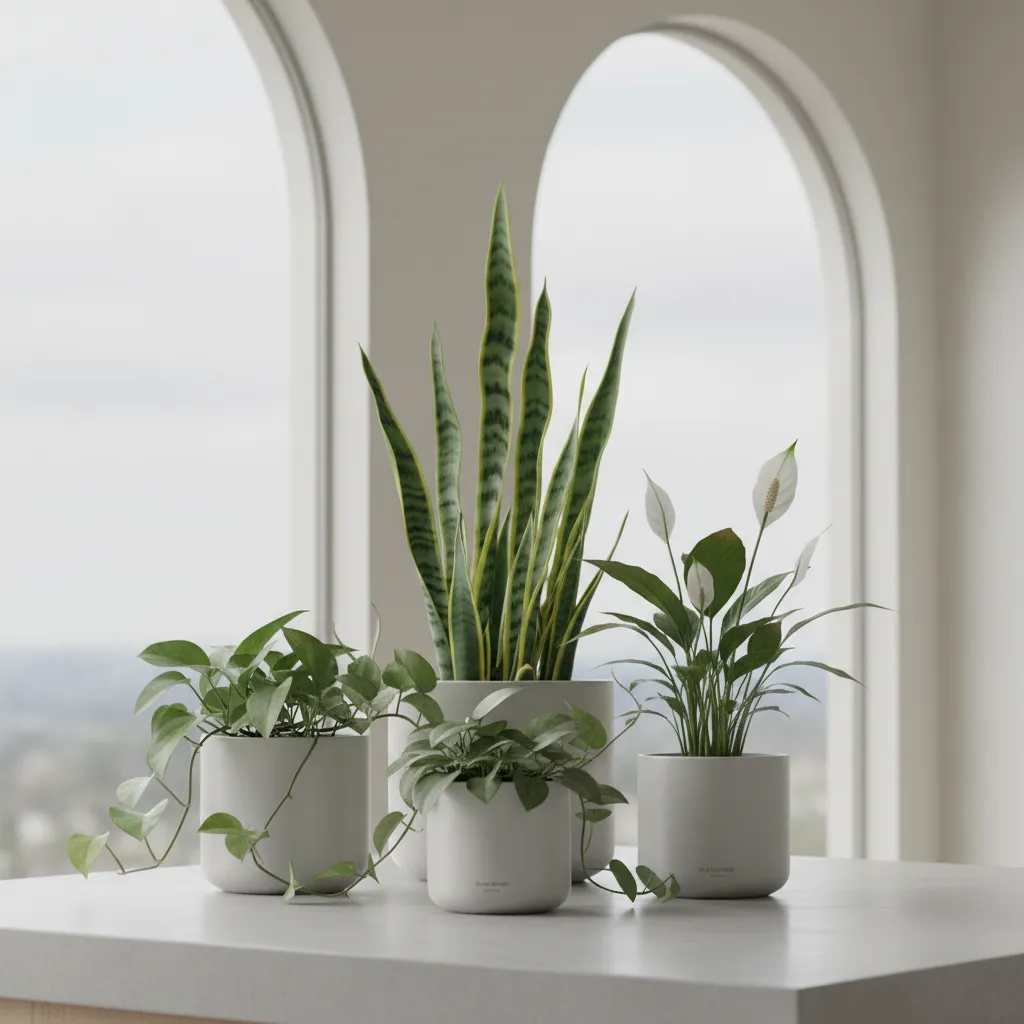
Based on 1980s NASA experiments in small sealed chambers showing certain plants absorbed VOCs (e.g., formaldehyde, benzene). Real homes would require hundreds of plants per room to replicate those effects.
- Practice
- Environment
- Principle
- Protection
- Tactic
- Air Quality Optimization
- Evidence grade
- Weak
- Strength of evidence
- Low
How to practice Houseplants for air purification
Keep indoor plants for aesthetic and mental-health reasons, not for air cleaning. Enjoy them for stress reduction and indoor nature connection, but don’t rely on them as an air-quality strategy.
The evidence behind Houseplants for air purification
Houseplants lift your mood, ease stress, and make the air feel fresher. Those benefits are mostly psychological. Several modern studies in offices and homes show that a typical number of plants barely changes levels of VOCs or airborne particles, so plants don't measurably clean the air.
Reviewed by BetterBrain's clinical advisors · Updated November 2026 · Our science
More Environment techniques
Pair this with other habits from the same practice.
Evidence grade: Essential
Avoid Non-stick (PFAS-based) Cookware
Use stainless, ceramic, or cast iron instead of Teflon-type coatings.
Evidence grade: Essential
Reverse Osmosis (RO) Filtration
Under-sink or whole-home RO systems with carbon pre-filter.
Evidence grade: Context Dependent
Activated Carbon Block Filter
Countertop or inline carbon blocks for organic chemical reduction.
Take control of your brain health
BetterBrain gives you a personalized protocol of techniques like these, backed by science and tailored to you.