Environment · Brain health technique
MERV-13 or higher HVAC filters
Evidence grade: Context Dependent
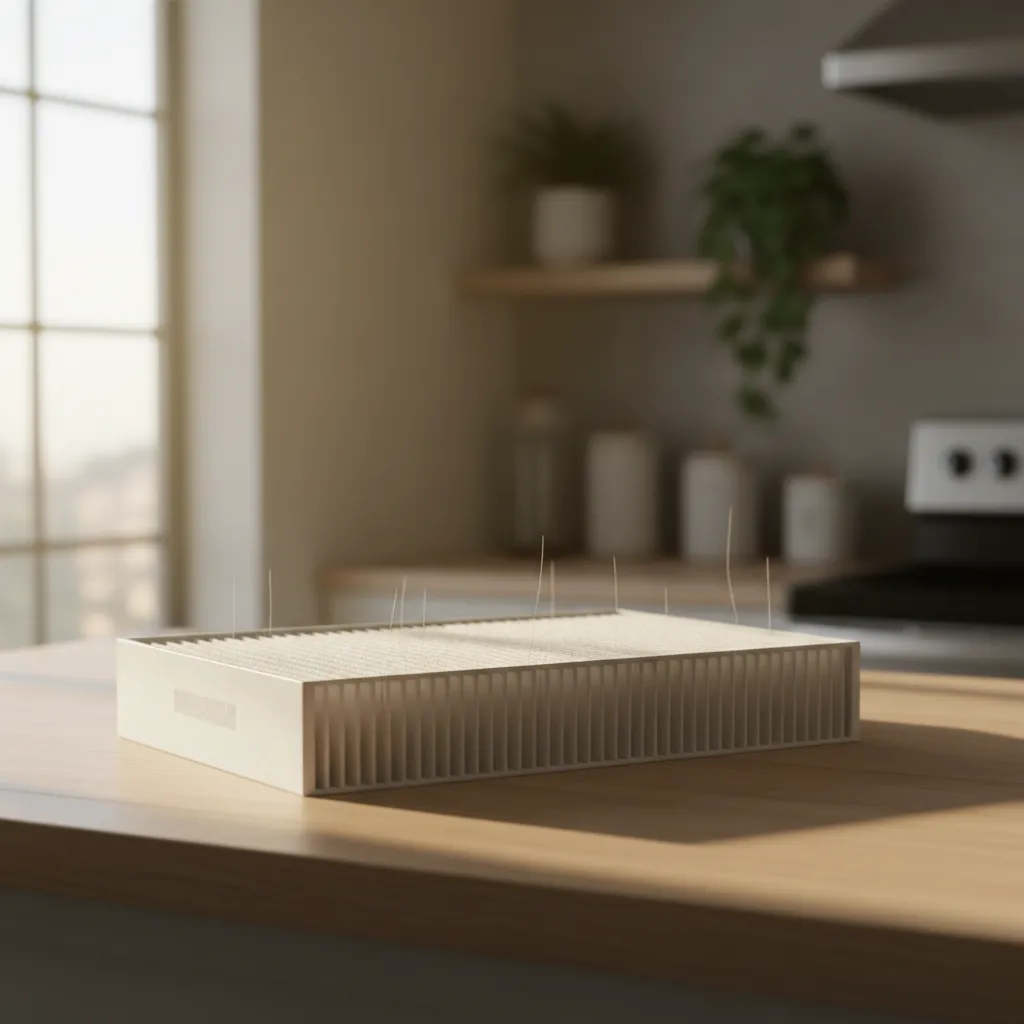
Central forced-air systems that use MERV 13–16 filters instead of the common MERV 8. Higher MERV ratings trap > 85 % of PM₂.₅, mold spores, and bacteria with each pass. Cleans the air continuously when the blower runs.
- Practice
- Environment
- Principle
- Protection
- Tactic
- Air Quality Optimization
- Evidence grade
- Context Dependent
- Strength of evidence
- Medium
How to practice MERV-13 or higher HVAC filters
Replace filters every 3 months (monthly during wildfire or dust season). Set fan to circulate for 15–30 minutes each hour. If your system can’t handle MERV 13, use MERV 11 plus portable HEPA units.
The evidence behind MERV-13 or higher HVAC filters
Studies in real buildings and hospitals show MERV-13 filters cut indoor PM₂.₅ by 40 to 60%. That lowers airway irritation and markers of stress on your blood vessels. The extra energy cost and the filter's resistance to airflow are minor trade-offs.
Impact on brain health
Direct data on brain health are lacking. But the blood vessel and inflammation pathways involved are the same ones linked to cognitive aging.
Reviewed by BetterBrain's clinical advisors · Updated November 2026 · Our science
More Environment techniques
Pair this with other habits from the same practice.
Evidence grade: Essential
Avoid Non-stick (PFAS-based) Cookware
Use stainless, ceramic, or cast iron instead of Teflon-type coatings.
Evidence grade: Essential
Reverse Osmosis (RO) Filtration
Under-sink or whole-home RO systems with carbon pre-filter.
Evidence grade: Context Dependent
Activated Carbon Block Filter
Countertop or inline carbon blocks for organic chemical reduction.
Take control of your brain health
BetterBrain gives you a personalized protocol of techniques like these, backed by science and tailored to you.