Environment · Brain health technique
Natural ventilation
Evidence grade: Context Dependent
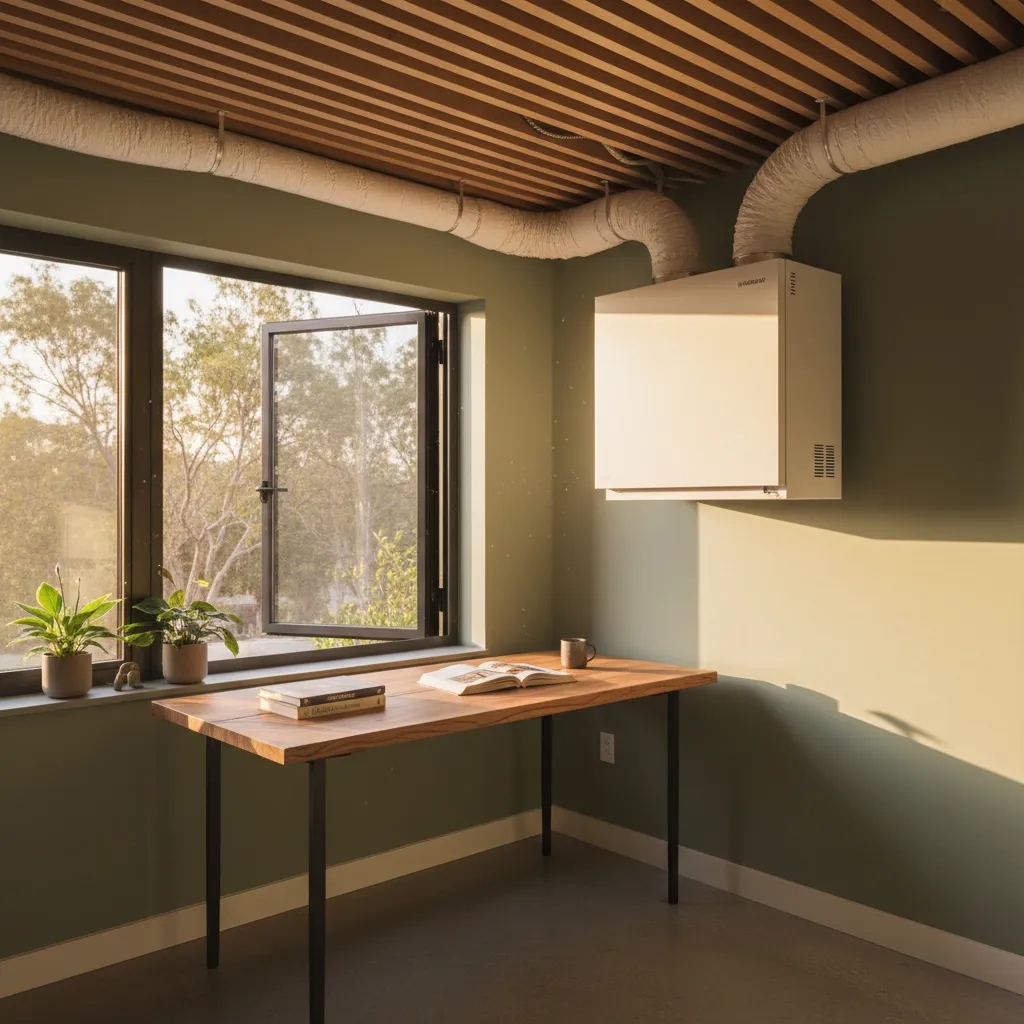
Regularly replacing indoor air with outdoor air through windows, vents, or exhaust fans to lower carbon dioxide (CO₂), volatile organic compounds (VOCs), and indoor humidity. Especially important in sealed or energy-efficient buildings where air recirculates.
- Practice
- Environment
- Principle
- Protection
- Tactic
- Air Quality Optimization
- Evidence grade
- Context Dependent
- Strength of evidence
- Medium
How to practice Natural ventilation
Ventilate 10–20 minutes a day when outdoor AQI < 75. Create a cross-breeze with two windows or use bathroom/kitchen fans. During smoke or smog events, seal windows and rely on filtration instead. Monitor CO₂; aim to keep < 800 ppm in main living areas.
The evidence behind Natural ventilation
Indoor CO₂ often tops 1,000 ppm (parts per million) in occupied rooms. Opening windows or running exhaust fans brings in fresh air and lowers CO₂. Ventilation also dilutes odors, moisture, and VOCs. How well this works depends on outdoor air quality. Ventilation helps when outdoor air is clean but can raise your exposure during wildfire smoke or heavy traffic pollution.
Impact on brain health
Indoor CO₂ above 1,000 ppm is linked to slower decision-making and increased mental fatigue.
Reviewed by BetterBrain's clinical advisors · Updated November 2026 · Our science
More Environment techniques
Pair this with other habits from the same practice.

Evidence grade: Essential
Avoid Non-stick (PFAS-based) Cookware
Use stainless, ceramic, or cast iron instead of Teflon-type coatings.

Evidence grade: Essential
Reverse Osmosis (RO) Filtration
Under-sink or whole-home RO systems with carbon pre-filter.

Evidence grade: Context Dependent
Activated Carbon Block Filter
Countertop or inline carbon blocks for organic chemical reduction.
Take control of your brain health
BetterBrain gives you a personalized protocol of techniques like these, backed by science and tailored to you.